
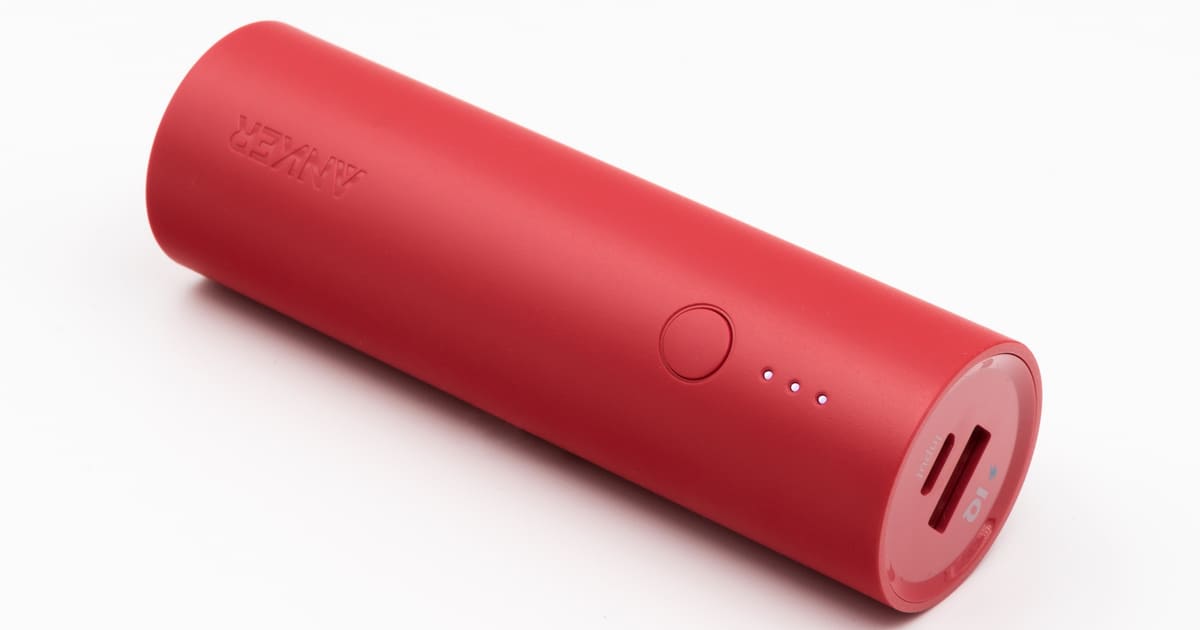
Start with four checks: the watt-hours printed on your power bank, the number allowed, where it must stay, and whether you may use it on board. Keep an accepted unit in cabin baggage, protected from damage and short circuits. Permission to carry it does not automatically include permission to charge your phone with it.
Read the Wh label, not just the large number on the box
Look for the watt-hour rating, written as Wh, on the unit or in its manufacturer’s specifications. A headline such as “65 W” describes power output; it does not tell you the stored energy used for an airline’s capacity limit.
If the manufacturer supplies milliamp-hours and the battery’s nominal voltage, the calculation is Wh = mAh × nominal volts ÷ 1,000. For example:
- A 20,000 mAh battery at a nominal 3.7 volts stores 74 Wh.
- A 30,000 mAh battery at a nominal 3.7 volts stores 111 Wh.
Those examples assume 3.7 volts. Do not substitute a USB output voltage or assume every battery uses that nominal voltage. Keep the rating readable; if you cannot verify it, ask the manufacturer and airline before travelling. IATA’s passenger guidance warns that an operator may refuse a battery whose Wh rating cannot be verified. A calculation alone is not permission to fly with it.
Check the power-bank section for every operating airline
Find the airline actually operating each flight, including connections and codeshares. Check its limit per bank, maximum number and approval process. Read the section specifically about portable chargers: allowances for spare camera or laptop batteries can differ.
American Airlines currently permits two power banks, each no more than 100 Wh. Singapore Airlines permits two: up to 100 Wh without prior approval, or above 100 Wh through 160 Wh with prior approval. These examples were checked on October 30, 2026; they are carrier-specific conditions.
The 111 Wh example therefore exceeds American’s published bank limit, while Singapore Airlines requires advance approval. Do not assume an approval request can override a prohibition, or that one carrier’s approval covers your next flight. If you also carry larger spare batteries, ask about the combination rather than adding the separate allowances together. Our airline-limit comparison explains why these policies differ.
Check departure rules as well as the airline
ICAO’s March 27, 2026 specifications introduced a two-bank limit and prohibited recharging banks during flight. National implementation and airline conditions still matter.
For departures from Singapore, CAAS’s rules took effect on April 15: two banks maximum, no recharging on board, and advice against using them to charge devices. Japan’s April 24 changes limit banks to two, each no more than 160 Wh, and prohibit both charging directions on board. Check the airline’s capacity and approval conditions too. Our Japan guide and Singapore guide cover those departure changes in more detail.
Pack for the moment your cabin bag gets checked
The FAA’s PackSafe guidance requires power banks in carry-on baggage. If staff take your bag at the gate or aircraft side, remove the bank before the bag goes into the hold. Put it somewhere you can reach without unpacking everything.
Carrying, recharging and using are three separate checks
Ask whether you may carry the bank, recharge it from aircraft power, and use it to charge another device. Singapore Airlines prohibits both charging directions. Its advisory says banks should remain accessible rather than in overhead storage. American prohibits overhead storage and recharging banks from in-seat power, and requires them within reach and visible while in use. Follow your operating carrier and the crew’s instructions; there is no single storage or device-charging permission for every airline.
Check its condition before you leave
Do not pack a damaged or recalled battery that poses a heat or spark hazard. If a battery or device overheats, expands, smokes or burns during the flight, tell the crew immediately. Charge your phone before boarding so your plans do not depend on using a bank in the cabin.
For an optional calculation aid, use the existing power-bank checker. For what to remove when a bag is taken at the gate, read our gate-check guide.
Sources and review date
Checked on . Requirements can change. Use the official links to check your route again before departure.
- FAA PackSafe: cabin baggage, capacity and damaged batteries
- IATA: battery ratings and passenger guidance
- ICAO: March 27, 2026 power-bank specifications
- American Airlines: portable chargers, separately from spare batteries
- Singapore Airlines: carriage, approval, storage and use
- CAAS: April 15 requirements for departures from Singapore
- Japan MLIT: April 24 power-bank changes (Japanese)

